CLIENT TESTIMONIAL
The self-cleaning intake screens provided a low-maintenance, cost-effective alternative that exceeded our environmental performance expectations. Their integration allowed us to achieve better water quality outcomes while reducing capital and operational expenditure.” - Project Engineer, Local Water Utility
Project Summary
A stormwater upgrade in Queensland required improved management of wet weather overflows and better water quality prior to discharge into downstream wetlands. By replacing traditional screening infrastructure, including a Gross Pollutant Trap, with AWMA’s self-cleaning debris exclusion screens, the project team achieved significant capital savings, reduced operational costs, and enhanced environmental outcomes.
Traditional coarse screens are highly susceptible to clogging because of their high intake velocities (typically 1–3 m/s). In contrast, AWMA screens operate at very low approach velocities (<0.1 m/s), which eliminates or significantly reduces the risk of debris blockage. These low velocities also prevent native fish entrainment and impingement, further protecting aquatic habitats.
Early technical collaboration for modern debris exclusion screens enabled the adoption of this streamlined, low-maintenance screening solution that provides continuous debris exclusion, reduces manual cleaning, and improves the quality of flows entering the wetland treatment system.
The installation delivered capital savings as well as annual operational savings. Beyond the financial benefits, the solution reduced the risk of blockages, minimised manual cleaning requirements, and improved the quality of water entering the downstream wetlands, helping protect native fish species and aquatic habitats.
Project Objectives
AWMA were engaged to supply Intake Screens for a Stormwater Sedimentation Basin, providing for an innovative urban water screening solution.
The project aimed to mitigate wet weather flooding and sewer overflows, protect local communities, and enhance the environmental health of the receiving waterway. The broader upgrade combined traditional civil works with nature-based solutions, including a new wet weather pump station, extensive underground pipeline installation, and the creation of a new wetland ecosystem.
The intent of this approach was to reduce uncontrolled overflows, lower public health risks associated with contaminated waterways and provide improved environmental outcomes while delivering measurable cost efficiencies, compared to traditional infrastructure models.
Challenges
The project site was located within a catchment that experienced frequent wet weather flooding and high debris loads during intense rainfall events. The stormwater and sewer networks were under pressure during these conditions, resulting in overflows that posed risks to residential areas,
public health, and local ecosystems.
Environmental assessments identified native aquatic species within the receiving waters, requiring a design solution that balanced hydraulic efficiency with ecological protection.
The challenge was to deliver reliable stormwater screening without compromising environmental integrity or incurring excessive lifecycle costs.
The AWMA Screening Solution
Initial designs included coarse screens and a Gross Pollutant Trap.
Through early engagement, the screen team determined that self-cleaning intake screens could replace both elements, providing equivalent or superior debris exclusion without the associated civil works or maintenance costs.
The installed system comprised:
-
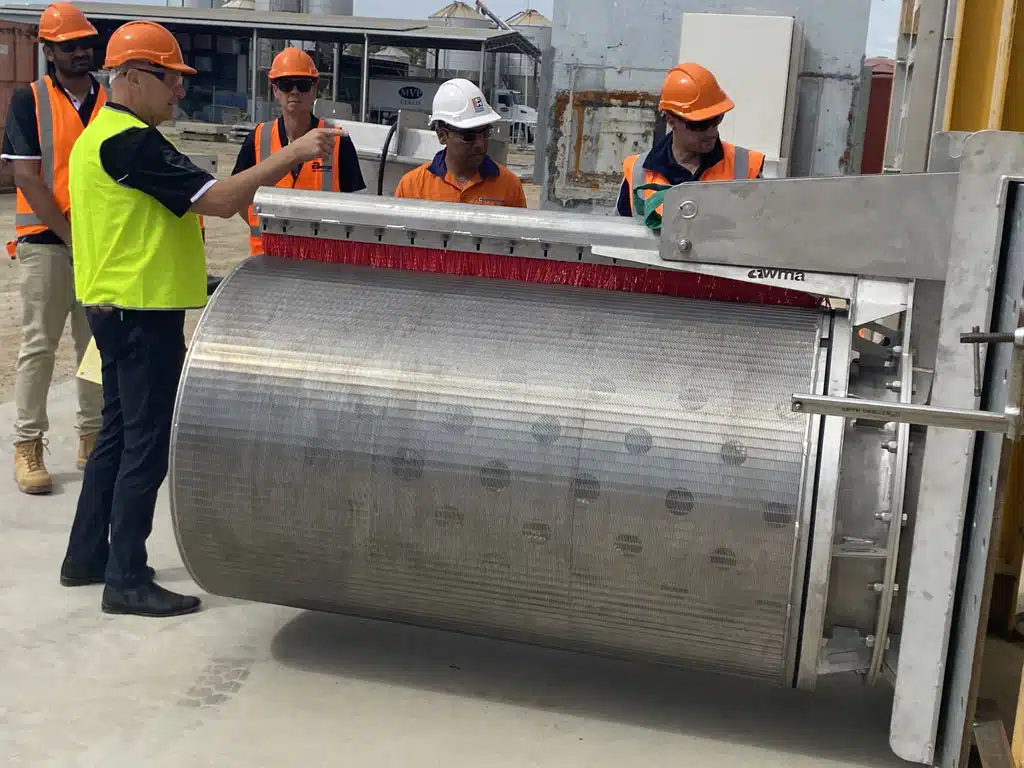
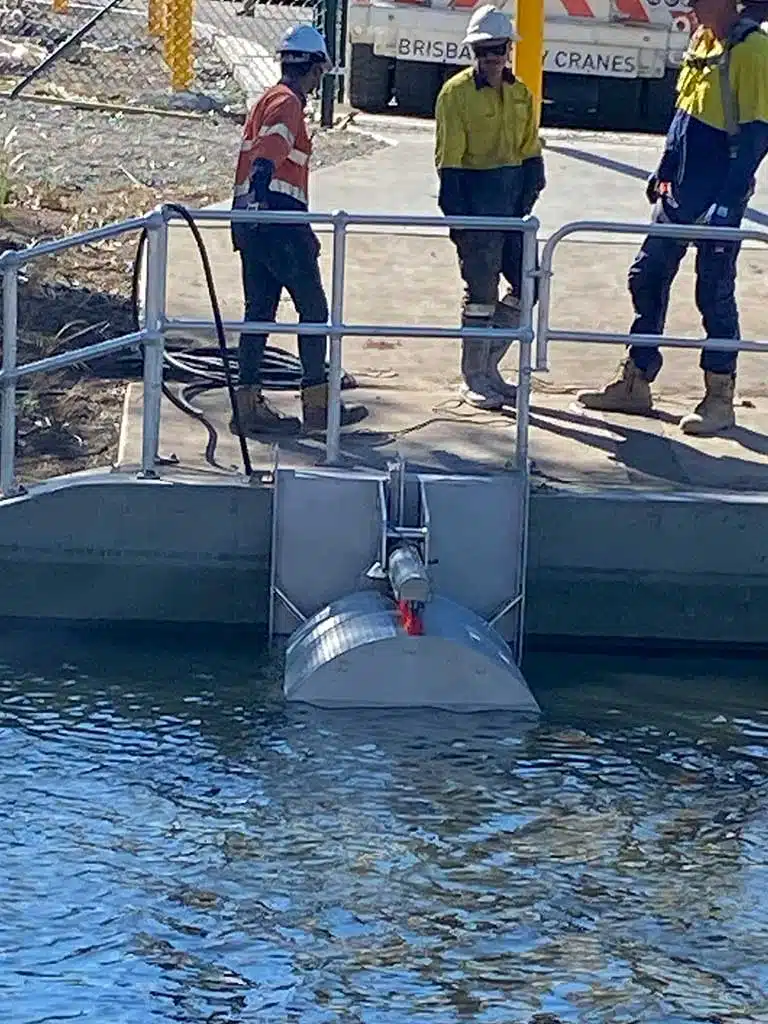
Two electric-driven, self-cleaning cylinder screens
-
46 ML/day design flow per screen
-
2 mm stainless steel wedge wire filtration
-
Wall-mounted arrangement with isolation plates
-
Integrated lifting points for safe retrieval and inspection
AWMA's design methodology considers the waterway's natural sweeping velocity to minimise debris accumulation at the intake.
The system operates reliably under variable flow conditions, reducing blockages and ensuring continuous operation with minimal operator intervention.
The fine filtration provided by the screens also improved water quality before discharge to the downstream wetlands.
Outcomes & ROI
The project achieved approximately $150,000 in capital cost reduction and $7,500 in annual operational savings.
The self-cleaning screening system:
-
Eliminated the need for a Gross Pollutant Trap
-
Reduced blockages and improved system reliability
-
Enhanced water quality entering downstream wetlands
-
Supported fish protection and environmental compliance
-
Delivered 3-5yrs return on investment
Long-term operational savings will continue to accrue through reduced maintenance, fewer site visits, and improved performance during peak storm events.
Beyond the financial benefits, the self-cleaning screening system improved overall site performance by reducing blockages and enhancing reliability, particularly during peak storm events.
It also improved water quality entering downstream wetlands, supported fish protection outcomes, and helped ensure ongoing environmental compliance.
Collectively, these outcomes contributed to an estimated 3–5 year return on investment, with long-term savings continuing to accrue through reduced maintenance demands, fewer site visits, and improved system performance.
Conclusion
This upgrade demonstrates the effectiveness of AWMA’s self-cleaning intake screen technology in delivering reliable and environmentally responsible stormwater management. The solution provides measurable
financial and operational benefits, enhances water quality, and protects sensitive aquatic environments.
Through innovation and collaboration, AWMA delivered a future-focused, sustainable, low-maintenance system that reduces flood risk, safeguards the environment, and provides enduring value to both asset owners and the community.
Project Data
-
Location: Queensland
-
Water Source: Creek used for stormwater management
-
Design Flow: 46 ML/day per screen
-
Screen Aperture: 2 mm
-
Screen Type: Self-cleaning cylinder screens (2 units)
-
Material: 316 stainless steel wedge wire
-
Mounting: Wall-mounted with isolation plates
-
Retrieval System: Integrated lifting points
-
Operational Savings: annually
-
Capital Savings: initially
-
ROI: 3-5yrs