For Geoff, the decision to upgrade his pump screen wasn’t about bells and whistles, it was about investing in a smarter, more resilient intake screen solution.
Economically and operationally, it’s night and day compared to what we had, this is a better system, for my crops, for my equipment, and for the river that supports them both.”
Along the Barwon River in Walgett, NSW, irrigator Geoff Kirkby has seen a dramatic transformation in the performance and reliability of his water infrastructure. The shift from a basic, labour-intensive intake to a fully automated, self-cleaning system has delivered significant operational, economic, and environmental benefits.
Geoff manages a family-run farming operation producing cotton, wheat, chickpeas, and sorghum. For him, water is not just essential, it’s the foundation of everything. His previous system was a simple pipe drawing directly from the river, fitted with a basic mesh that offered minimal protection from debris and aquatic life. “It kept the big stuff out,” Geoff explains, “but everything else; twigs, leaves, even fish still got pulled through.” The impacts were widespread: pumps worked harder, components wore out faster, and downstream channels became clogged with trash. Fish and other aquatic life were routinely drawn into the system and transported kilometres away into on-farm storages.
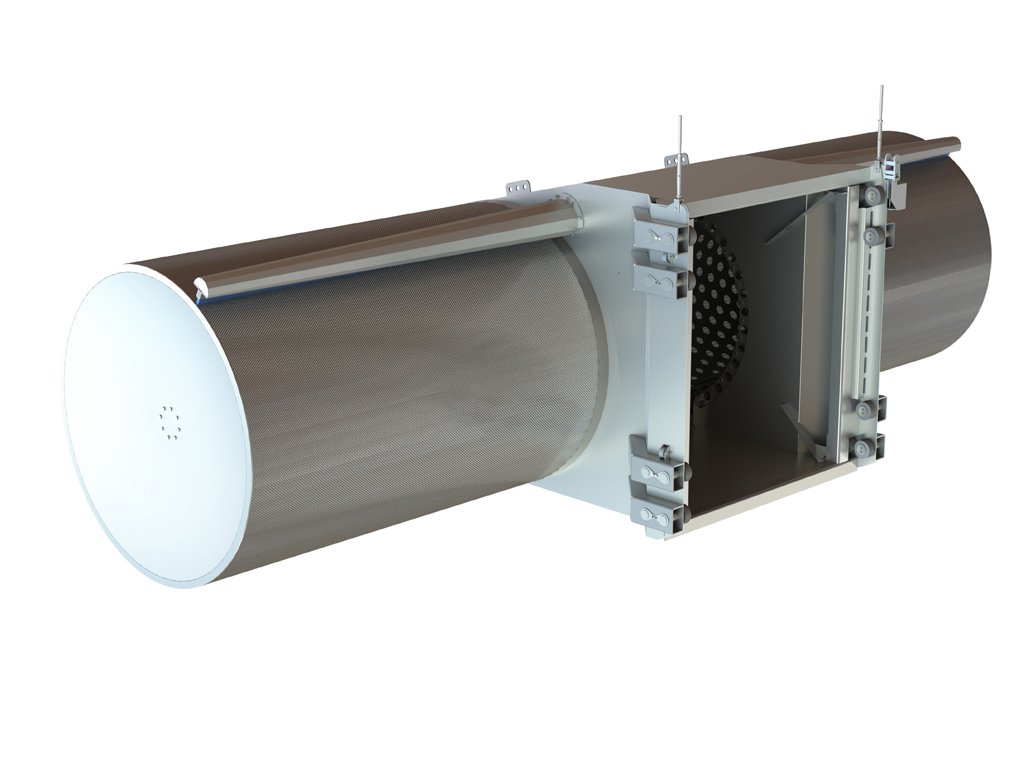
With support from AWMA and project partners, Geoff installed a self-cleaning fish protection screen, designed specifically for low-maintenance, high-efficiency water extraction. The screen is integrated with a solar-charged hydraulic power unit (HPU), programmed to activate a cleaning cycle four times every 24 hours. The change has been immediate and measurable. “I didn’t have anything close to that level of control before”, Geoff says.
The screen not only ensures cleaner water entering the system but also significantly reduces the risk of breakdowns. “I’m not having to backflush or fix my pump anymore,” he continues. “That time-consuming stuff is gone. My whole system runs better.” Debris no longer reaches the pumps, protecting critical infrastructure and extending the life of high-value equipment. In an industry where reliability during peak irrigation periods can make or break a season, this kind of performance is invaluable. “Before, sticks and other junk would go straight through the pump, and you know that can’t be good for it. Now, the water going through is clean, and that means fewer breakdowns and longer life for all my gear.”
One of the standout features for Geoff has been the fully automated nature of the screen. The “set-and-forget” functionality has removed the need for constant monitoring and reactive maintenance. “Compared to before, this is chalk and cheese,” he says. “I program how often it cleans, and it just works.” With reduced manual input, Geoff is able to focus on managing his farm rather than maintaining infrastructure.
The environmental benefits are also clear. Fish are no longer drawn into the system, and the low-suction design ensures aquatic life remains undisturbed. “If you put your hand on that screen in the water, there’s zero suction now. No wonder the fish don’t get drawn in. It’s working exactly the way it should.”
AWMA's contribution to this project included design, supply, and installation of the intake screen, HPU, retrieval system, solar panel, and electrical control cabinet. Pre-testing was conducted on the second section of the retrieval system to ensure smooth on-site commissioning, with no adjustments required after transport. The turn-key solution delivery ensured a seamless transition from Geoff’s old intake to the new system.