To safeguard the community’s water supply, a NSW regional council undertook an upgrade of the raw water intake that draws from Billabong Creek.
The original intake relied on open suction pumps and a single in-line filter, which proved unsustainable. Frequent clogging, high labour demands, and the inability to adequately protect downstream infrastructure resulted in excessive operating costs and reduced water quality.
AWMA designed and delivered a self-cleaning intake screen engineered to eliminate debris entrainment at the intake, providing cleaner water to the filtration system. The installation restored system reliability, improved water quality, reduced operating costs, and achieved return on investment within twelve months of commissioning.
The project aimed to improve raw water quality at the source, reduce labour and maintenance costs, and secure reliable water supply for the community. Compliance with NSW Fish Screen Guidelines was also essential to ensure environmental responsibility and operational efficiency.
The existing intake arrangement consisted of two suction pumps drawing water directly from the creek, with a single 500-micron in-line filter providing the only means of screening solids and aquatic organisms. The filter struggled with the high debris loads of sediment, seasonal vegetation and aquatic life.
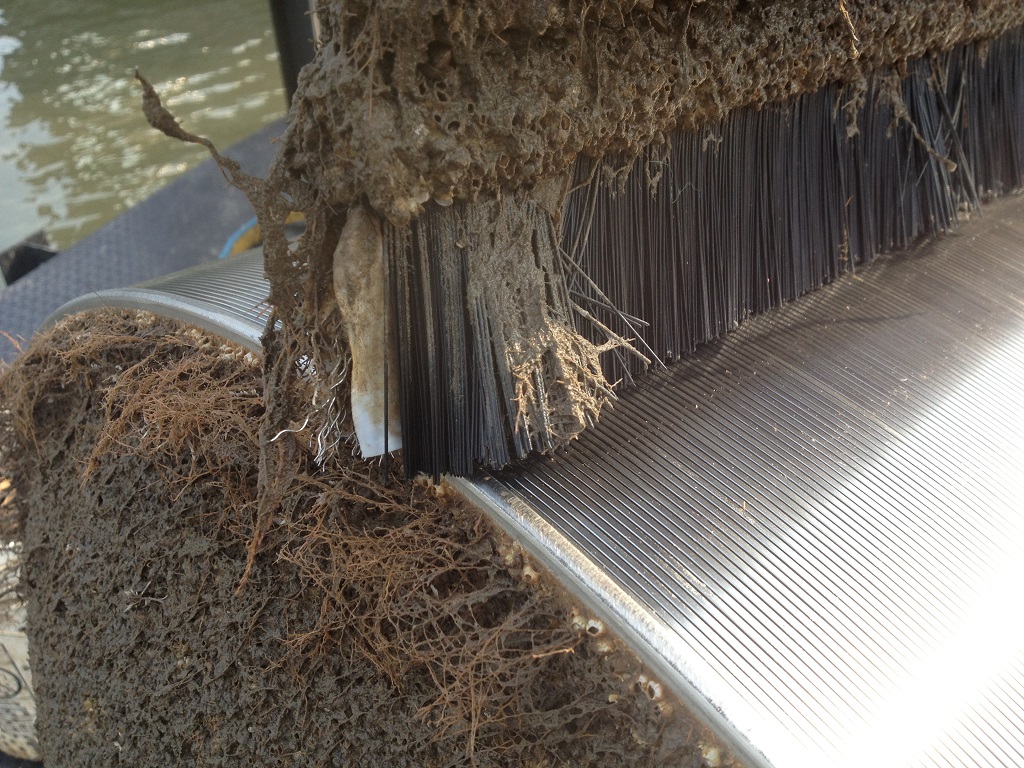
This led to frequent clogging resulting in up to one hundred backflush cycles per day, consuming excessive water and energy. Operators were required to dismantle the filter housing and pressure-clean the unit, a time-intensive and repetitive task that consumed extensive labour annually. The filter elements themselves were prone to damage, requiring full replacement approximately once per year. When the system could no longer be sustained, the filter was bypassed altogether. This left the raw water supply unprotected, increasing the debris load to the treatment plant, reducing pump performance, compromising water quality, and raising the risk of damage to critical infrastructure. The situation was no longer viable and prompted the council to investigate alternative intake solutions.
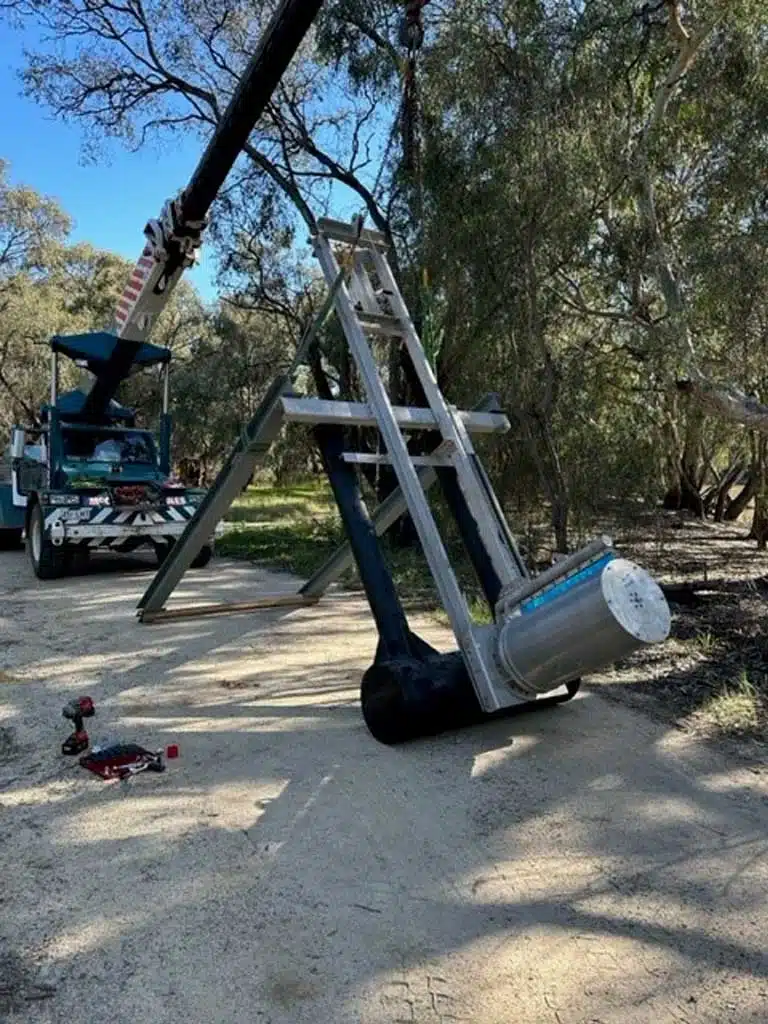
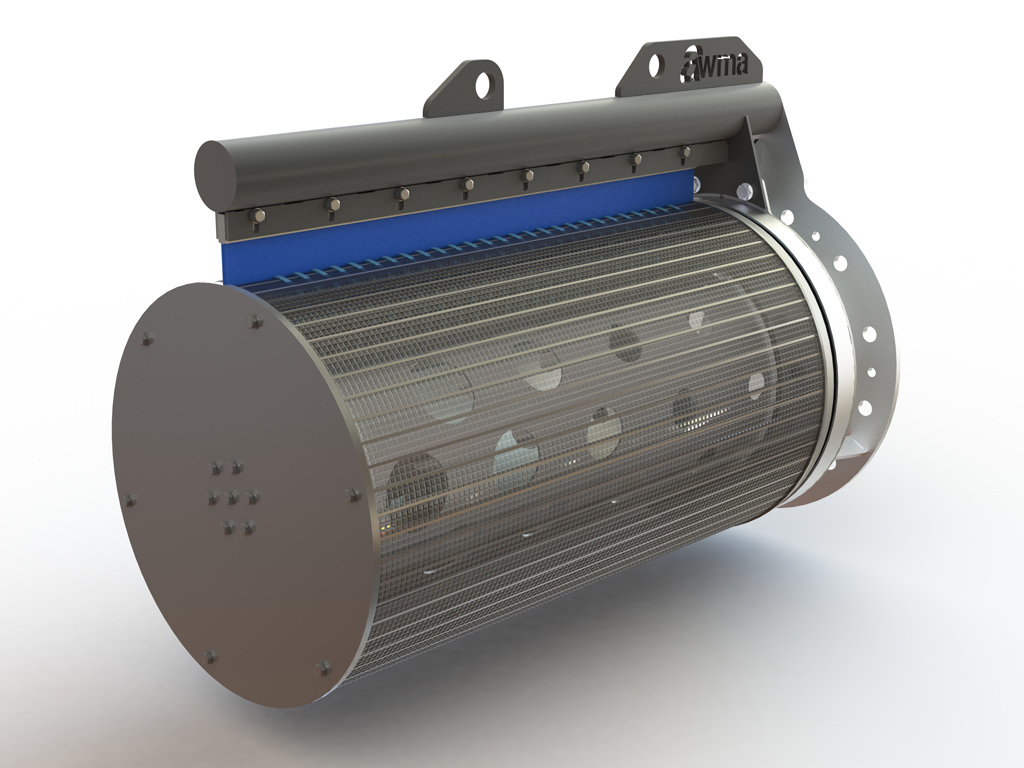
In response to the challenges identified, AWMA installed a custom-designed, single self-cleaning cylinder screen for the raw water intake. Fabricated from grade 316 stainless steel wedge wire, the screen medium is robust, durable and corrosion resistant. The screen has a 1mm aperture, designed to process up to 12ML/day, with a low approach velocity of less than 0.1 metres per second. The screen design ensures efficient debris exclusion while protecting aquatic life in compliance with environmental regulations. To accommodate the site’s dual-pump configuration, a custom polyethylene manifold was supplied, integrating both suction lines into a single screened intake point. This bespoke component simplified the hydraulic arrangement and streamlined installation. A manual winch operated retrieval system was incorporated, enabling safe and efficient access to the screen for inspection without the need for cranes, divers or confined space entry.
The result was a robust, low-maintenance intake solution tailored to the operational and environmental requirements of a regional municipal water supply.
The new intake delivered immediate benefits in performance and cost efficiency. Beyond the financial outcomes, the new intake restored the reliability of the raw water supply and improved overall water quality for the community. Operational staff were able to reallocate time to other critical infrastructure priorities, while the use of a compliant, fish-friendly intake design strengthened the council’s environmental credentials and ensured long-term regulatory alignment.
AWMA’s self-cleaning intake screen resolved long-standing operational issues and delivered a reliable, environmentally compliant, and cost-effective solution that enhances the resilience of the town’s potable water supply. This project demonstrates how targeted investment in advanced screening technology can significantly reduce operational expenditure while ensuring sustainable community outcomes.